Register for the 5th International Placemaking Week in Detroit June 24-27, 2026!

Close Menu
Menu

The Placemaking Round-Up
A biweekly newsletter with public space news, resources, and opportunities.
Thank you! Your submission has been received!
Oops! Something went wrong while submitting the form.
The Biweekly Bazaar
A curated dispatch on all things public markets plus the latest announcements from the Market Cities Program.
Thank you! Your submission has been received!
Oops! Something went wrong while submitting the form.
Case Studies
Public Spaces Archive
Hall of Shame Archive
Great Public Spaces
Please note that these Hall of Shame nominations were written in a moment in time (most over a decade ago) and likely have since changed or even been transformed. If the above entry is now great, or still not so great, go ahead and comment below on how it has evolved or nominate it as a great place.
*Nominee
Grand Army Plaza
Brooklyn
,
NY
,
USA
Contributed by
Kathleen Ziegenfuss
Project for Public Spaces
on
June 20, 2006
May 1, 2024
A plaza that links commercial Flatbush Avenue with Prospect Park, and which joins Park Slope and Prospect Heights neighborhoods.
What makes it Great?
Why it doesn’t work?

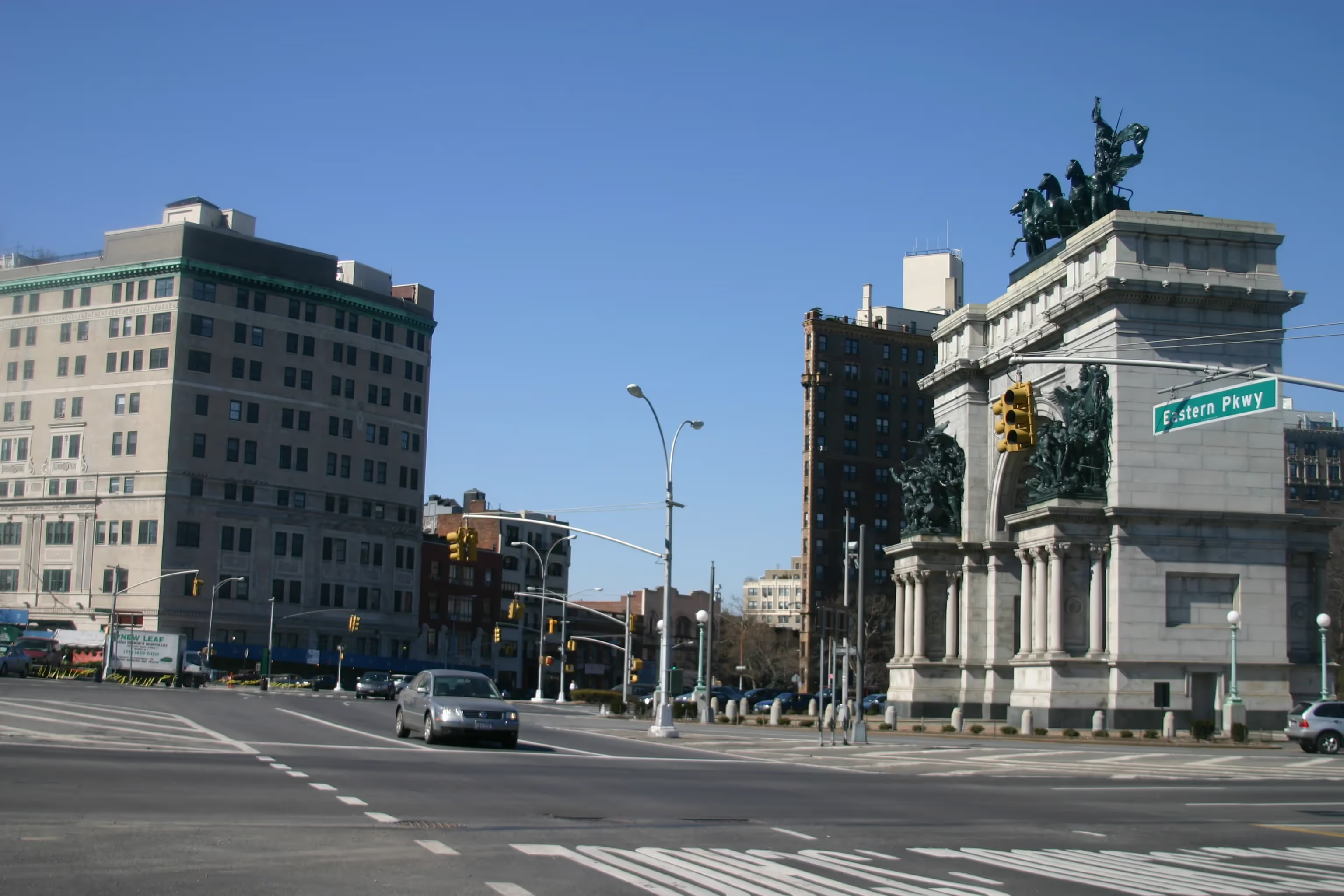
Grand Army Plaza is one of the most car-oriented intersections in Brooklyn, a place most people try to avoid even though it links commercial Flatbush Avenue with Prospect Park and connects the Park Slope and Prospect Heights neighborhoods. The place is terrifying to walk through, horrendous to bike through, and even scary to drive through.
The main reason behind Grand Army Plaza’s failure as a public space is the excessive street capacity devoted to traffic. There are no more than two lanes going in either direction at any entry point, yet the road unnecessarily expands to six lanes in the middle of the plaza. As a result, the green spaces within the traffic circle are extremely hard–even dangerous–to access, and the greatest traffic impact is felt right in front of the grand entrance to Prospect Park.
The Grand Army Plaza area is known as the heart of Brooklyn for good reason. Within a few blocks’ walk are the Brooklyn Public Library, Brooklyn Museum, Brooklyn Botanic Gardens, countless shops, restaurants and homes, and of course the renowned Prospect Park. Yet people rarely choose to walk to Grand Army Plaza itself. If people are the lifeblood of any successful place, then Grand Army Plaza is not a very healthy heart at all.
The plaza only comes to life on Saturdays when the weekly greenmarket sets up at the Prospect Park entrance. Other than that (and the wedding parties that brave six lanes of traffic to have their pictures taken near the newly renovated Bailey Fountain), people are just passing through.
Access & Linkages
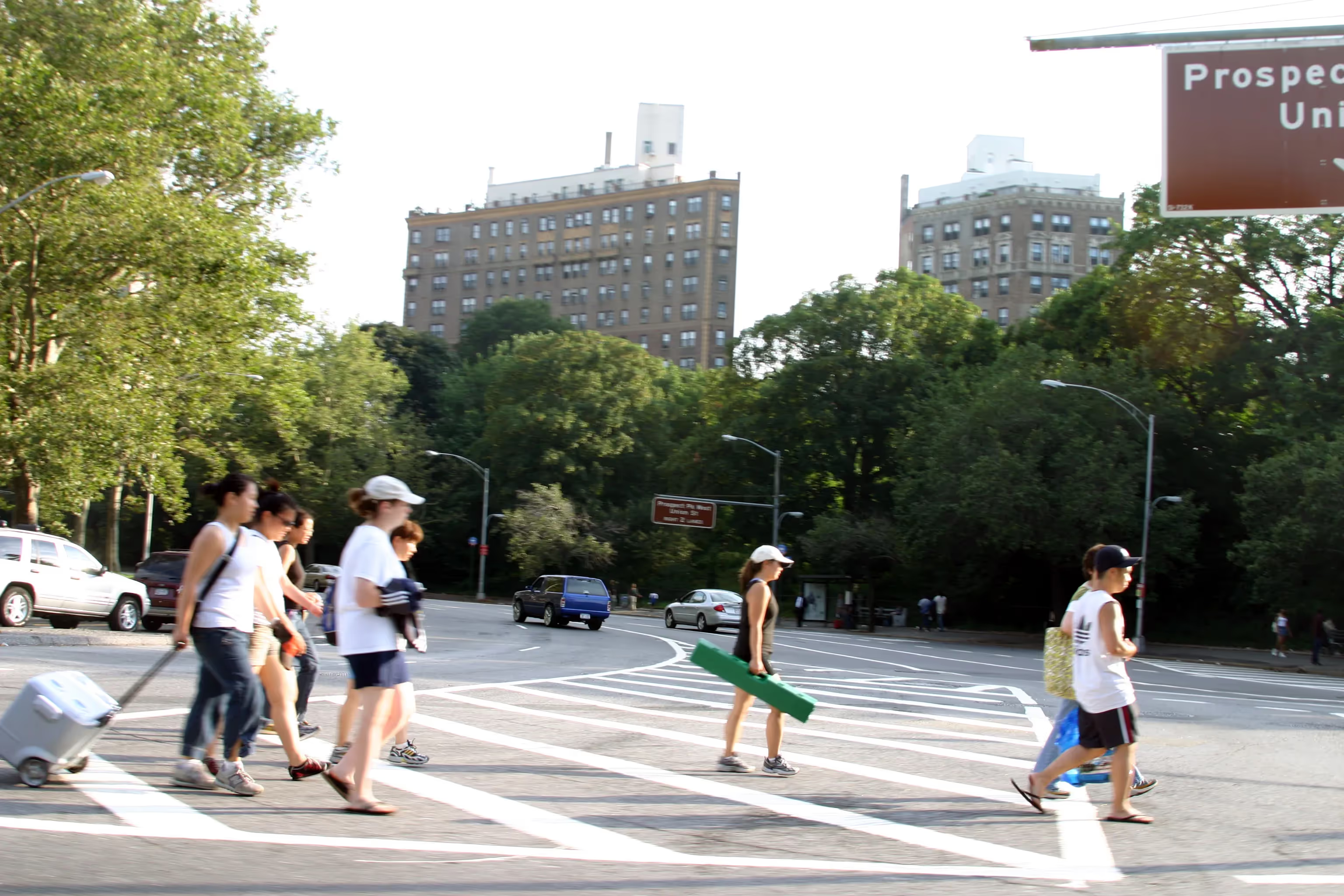
Stoplights do not allow pedestrians or bikers to move through the plaza quickly, but rather they must wait at multiple lights to get from one side to another.
The inner plaza is hidden from the Plaza Streets by 90’ berms (raised land masses which are fenced off). The crosswalks which exist from the inner plaza to the surrounding sidewalks leave one stranded in the middle, having to make a run across multiple lanes of traffic and hope for good luck!
Comfort & Image
This is one of the most uncomfortable places in Brooklyn. I try to avoid it by planning my route to circumvent the area, whether or foot or on bicycle.
Uses & Activities
The plaza is dominated by vehicle use. The inner park has newly renovated fountain and benches but is not accessible enough to let people actually get there to enjoy it.
Sociability
It could be a great spot, with lots of natural partners, but to date there is not much of a draw to meet people there or to enjoy the presence of others that are there. The inner plaza is isolated and feels a bit unsafe due to lack of people.
How Light?
How Quick?
How Cheap?
History & Background
Designed as a grand entrance to Prospect Park by original Prospect Park designers Olmsted and Vaux, the plaza opened in 1867. The memorial arch, created by John Duncan and completed in 1892, was designed after the Arc de Triomphe in Paris and transformed the plaza. In 1975, Grand Army Plaza became a National Historic Landmark.
In 2006, Project for Public Spaces helped set up the Grand Army Plaza Coalition to help generate a new community-based vision for improving the the plaza.
Related Links & Sources



*Please note that these Hall of Shame nominations were written in a moment in time (most over a decade ago) and likely have since changed or even been transformed. If the above entry is now great, or still not so great, go ahead and comment below on how it has evolved or nominate it as a great place.
 NOMINATE A PLACE
Corrections or additions? Email info@pps.org
Comments
tempest.services.disqus.com
tempest.services.disqus.com is blocked
This page has been blocked by an extension
- Try disabling your extensions.
ERR_BLOCKED_BY_CLIENT
Reload
This page has been blocked by an extension
Disqus Comments
We were unable to load Disqus. If you are a moderator please see our troubleshooting guide.
tempest.services.disqus.com
tempest.services.disqus.com is blocked
This page has been blocked by an extension
- Try disabling your extensions.
ERR_BLOCKED_BY_CLIENT
Reload
This page has been blocked by an extension
Stay Connected
Our two biweekly newsletters offer public space news, opportunities, and more.


© 1975 - 2025 Project for Public Spaces
Made By All. Used By All.
Stay Connected
Our two biweekly newsletters offer public space news, opportunities, and more.
Support Our Work
Together we can create a world of community-powered public spaces.


© 1975 - 2023 Project for Public Spaces
Made By All. Used By All.